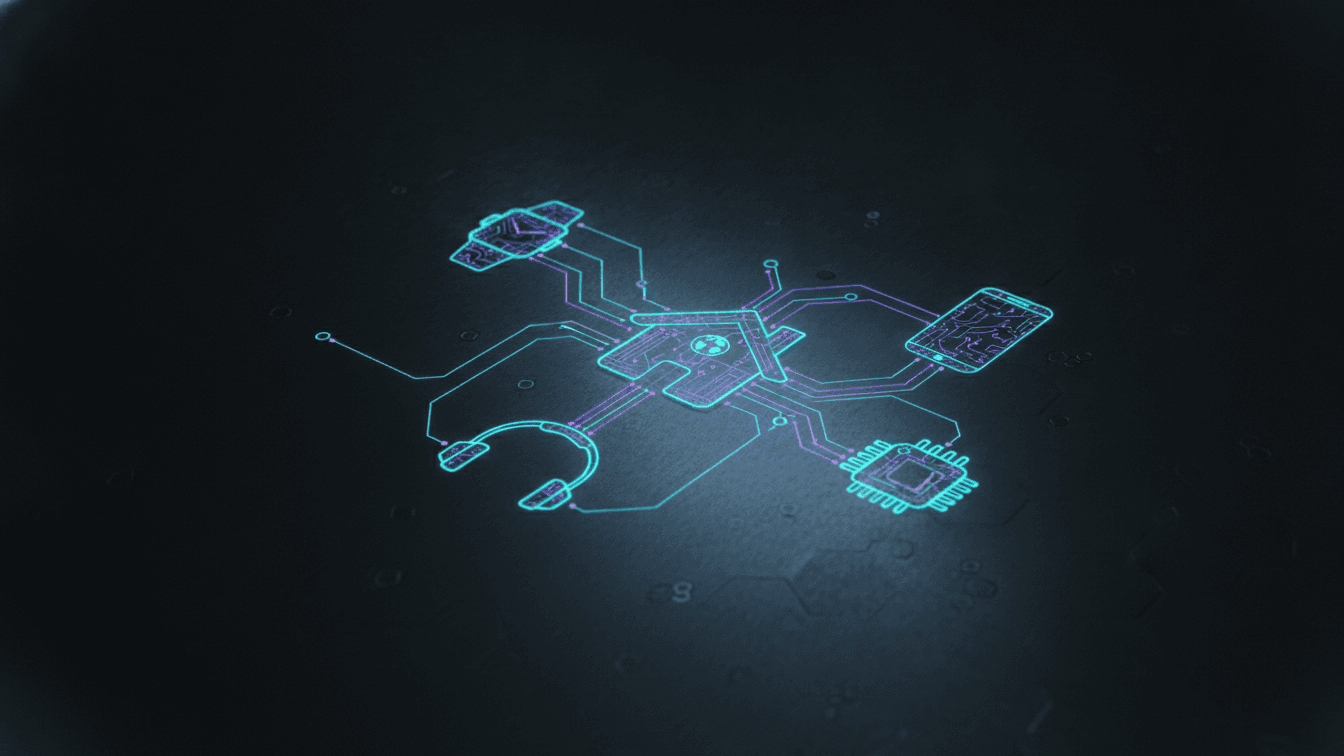
A device is any self-contained electronic unit that senses, processes, stores, or communicates data to accomplish a task. That definition spans the smartphone in your pocket, the laptop on your desk, the watch on your wrist, and the near-invisible sensor watching your front door. In 2026, the defining characteristic of a device is no longer what it does in isolation — it is how it connects. Most modern hardware is a node in a networked ecosystem, and understanding that shift is the key to buying, using, and future-proofing your gear.
This guide breaks down what qualifies as a device today, the major categories worth knowing, the connectivity and AI technologies powering them, and a practical framework for choosing the right ones.
What defines a "device" in the digital age of 2026
A device is an electronic unit that performs a discrete function by handling data — capturing it through sensors or inputs, processing it with an embedded chip, and often transmitting it over a wireless radio. What separates a modern device from a simple electronic appliance is programmability and connectivity: it runs software that can be updated, and it can exchange information with other devices.
That distinction reframes how we categorize hardware. A basic digital clock keeps time; a smart display keeps time, answers questions, controls your lights, and receives feature updates for years. Both show the hour, but only one is a device in the contemporary sense — a networked, upgradeable participant in a larger system. When you evaluate any piece of hardware, the most revealing questions are which ecosystem it belongs to and which standards it speaks.
Categories of consumer devices: smart home, wearables, mobile, and more
Most consumer hardware falls into a handful of durable categories. Knowing them helps you map any new gadget to its role and to the devices it will need to cooperate with.
- Mobile devices — smartphones and tablets. The smartphone remains the central hub of personal computing, doubling as the primary controller for most other categories.
- Computing devices — laptops, desktops, and mini-PCs, built for sustained productivity, creative work, and gaming with full operating systems and expandable performance.
- Wearables — smartwatches, fitness bands, and increasingly smart rings and glasses, focused on health sensing, notifications, and hands-free interaction.
- Audio devices — wireless earbuds, headphones, and smart speakers, where advances in active noise cancellation and low-latency wireless audio define the category.
- Smart-home devices — thermostats, sensors, plugs, cameras, locks, and lighting that automate the physical environment, typically coordinated through a hub or app.
- Connected accessories — trackers, styluses, controllers, and chargers that extend the devices above.
Here is how the categories compare on the attributes that usually drive a purchase.
Category | Primary role | Typical connectivity | What to weigh most |
|---|---|---|---|
Mobile | Central hub, communication | Cellular, Wi-Fi, Bluetooth | Ecosystem, software-support length |
Computing | Productivity, creation | Wi-Fi, wired, Bluetooth | Performance, repairability, ports |
Wearables | Health, notifications | Bluetooth LE, Wi-Fi | Sensor accuracy, battery life |
Audio | Listening, voice | Bluetooth, Wi-Fi | Codec support, noise cancellation |
Smart home | Automation, monitoring | Wi-Fi, Thread, Matter | Interoperability, privacy controls |
The evolution of devices: from basic tools to intelligent assistants
The arc of consumer devices runs from single-purpose tools to converged platforms to intelligent, networked assistants. Early electronics did one job: a calculator calculated, a camera captured film. Convergence collapsed many of those single-function tools into the smartphone, which absorbed the camera, music player, map, and computer into one programmable slab.
The current phase is distribution: intelligence spreads back out from the phone into a mesh of specialized, connected devices. Your watch reads your heart rate, your speaker parses your voice, your doorbell recognizes a package — and they coordinate. The organizing principle has shifted from "one device that does everything" to "many devices that cooperate seamlessly," with the smartphone acting as conductor rather than sole performer.
Key technologies powering today's devices (AI, IoT, connectivity)
Three technology layers make modern devices work together. Understanding them in plain terms is the single best upgrade to your buying judgment.
Wireless connectivity is the foundation. Wi-Fi handles high-bandwidth links for phones, laptops, and streaming devices. Bluetooth Low Energy connects nearby, battery-sensitive gear such as wearables and earbuds while sipping power. Thread is a low-power mesh network purpose-built for smart-home devices, where sensors relay signals through one another for reliable whole-home coverage.
Interoperability standards sit on top of connectivity. Matter is the cross-industry standard designed so that smart-home devices from different brands work together through a common language, reducing the fragmentation that historically locked buyers into a single vendor. When a product is Matter-compatible, it is far more likely to keep working as you add gear from other makers.
On-device AI is the newest layer. Modern processors increasingly include dedicated acceleration for machine-learning models, letting devices run tasks — speech recognition, photo processing, health analysis, translation — locally rather than sending everything to the cloud. The practical benefits are lower latency, better privacy, and functionality that works without a constant internet connection.
Together these layers turn a collection of gadgets into an ecosystem. A voice command captured by a speaker can be interpreted on-device, dispatched over Thread through Matter to a light, and logged on your phone over Wi-Fi — a chain that would have required proprietary bridges only a few product generations ago.
Choosing the right devices for your lifestyle and needs
The spec sheet is where most buying decisions go wrong. A higher number is not automatically better; the right device is the one that fits how you actually live and what you already own. Use this framework:
- Start with the ecosystem. Your existing phone, computer, and smart-home platform constrain what will integrate smoothly. Buying within a compatible ecosystem — or insisting on open standards like Matter — prevents the friction of devices that refuse to talk to each other.
- Weigh real-world performance over peak specs. Sustained performance, thermal behavior, and everyday responsiveness matter more than benchmark headlines. For wearables and audio, battery life under normal use is usually the deciding factor.
- Check the software-support window. A device's useful life is now set by how long it receives security patches and feature updates, not by when the hardware wears out. Longer support is real value.
- Prioritize repairability and sustainability. Replaceable batteries, available parts, and modular design extend a device's life and reduce cost of ownership. This is both a practical and an environmental consideration.
- Match features to genuine needs. Pay for the sensors, ports, and capabilities you will use. Unused premium features are simply cost without benefit.
Applied consistently, this framework tends to steer you toward gear that stays useful and cooperative for years — which is the whole point of building a device ecosystem rather than accumulating gadgets.
Future trends in device innovation: what to expect beyond 2026
The near-term direction of consumer devices is clear even without speculation. Expect broader interoperability as standards like Matter mature and more categories adopt cross-brand compatibility. Expect more capable on-device AI, pushing intelligent features off the cloud and onto the hardware in your hand or home. And expect a steady move toward ambient computing — interfaces built on voice, context, and automation that let devices act helpfully without demanding your constant attention.
Two quieter trends deserve attention: longer software-support commitments, driven by both regulation and consumer expectation, and a growing emphasis on repairability and sustainability. Both extend device lifespans and shift value from raw newness toward durability and openness. The most future-proof choice you can make today is to favor devices built on open standards with long support horizons.
Written by the editorial team at The Nerds Zone — precision reviews and in-depth analysis for people who love technology. This guide reflects durable, well-established principles of consumer device design and connectivity rather than time-sensitive pricing or benchmarks. Last updated: August 2026.
Frequently asked questions
- What are examples of electronic devices?
Common electronic devices include smartphones, tablets, laptops and desktop computers, smartwatches and fitness bands, wireless earbuds and headphones, smart speakers and displays, e-readers, gaming consoles and handhelds, and smart-home hardware such as thermostats, sensors, plugs, cameras, and lightbulbs. The unifying trait is that each senses, processes, stores, or transmits data electronically to perform a defined task, usually as part of a connected ecosystem.
- How do smart devices work?
A smart device combines sensors or inputs, a processor running embedded software, memory, and a wireless radio. It captures data locally, processes some of it on-device, and communicates over a protocol such as Wi-Fi, Bluetooth Low Energy, or Thread to a hub, app, or cloud service. Increasingly, machine-learning models run directly on the device, letting it recognize speech, images, or patterns without a constant internet connection.
- What is the most popular device in the world?
The smartphone is the most widely used consumer electronic device globally, serving as the primary computing and connectivity tool for billions of people. Its dominance comes from convergence: a single handset now replaces the camera, music player, navigation unit, and often the computer, while acting as the central hub and remote control for smartwatches, earbuds, and smart-home gear.
- What is the future of devices?
The trajectory points toward deeper interoperability, more capable on-device AI, and ambient computing where hardware fades into the background. Expect wider adoption of cross-brand standards like Matter, longer software-support windows, growing emphasis on repairability and sustainability, and interfaces — voice, gesture, and context-aware automation — that reduce the need to actively operate each device.